
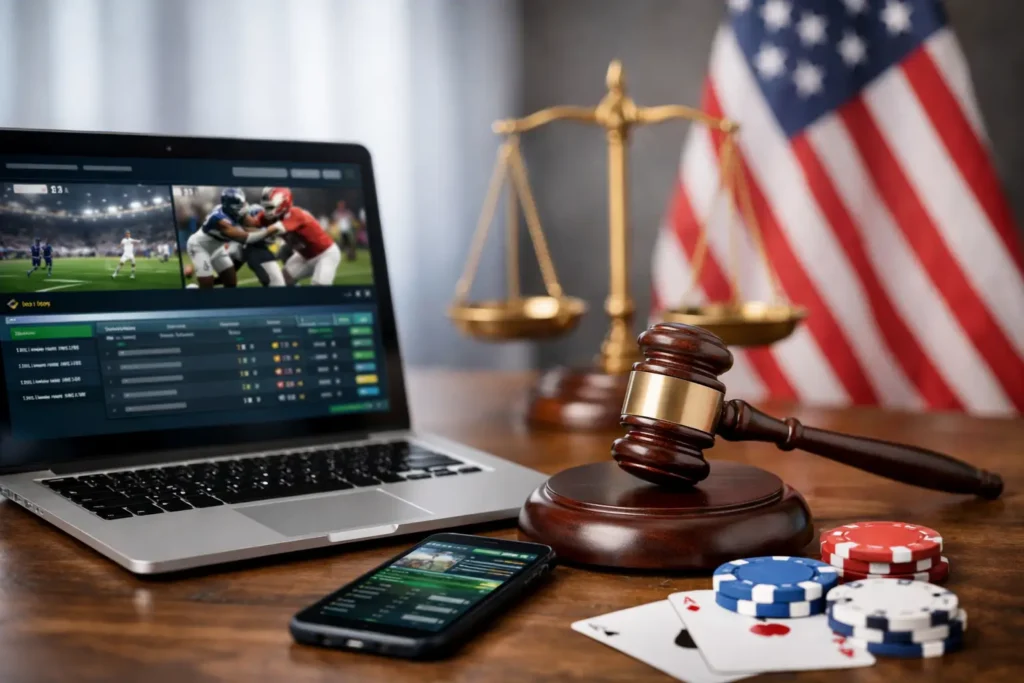
If you have ever tried to sign up for a sportsbook before kickoff and hit a wall because of your location, you already know the short answer to is online betting legal in us: yes, but only in certain ways and in certain states. That is the part that trips people up. Online betting is not one nationwide rulebook. It is a patchwork, and your state matters more than anything else.
For NFL bettors, that matters every Sunday. The legal sportsbook options in New Jersey are not the same as the options in Texas. The apps available for full mobile sports betting in Ohio are different from what you can use in California. So if you want to bet legally and avoid sketchy sites, you need to understand how the law actually works.
Is online betting legal in the US? The real answer
Yes, online betting is legal in the US in some states, but not across the whole country. There is no single federal law that says every American can place sports bets online from anywhere. Instead, each state decides whether to allow online sports betting, retail sports betting, both, or neither.
That means legal online betting depends on where you are physically located when you place the bet, not just where you live. If your state allows mobile sports betting, licensed apps can accept your wagers once your location is verified. If your state does not allow it, a regulated sportsbook cannot legally take your bet there.
This is where casual bettors often get confused. They hear that sports betting became legal in America and assume that means every sportsbook is open nationwide. It does not work like that. The market opened up after a major court ruling, but the rollout has been state by state ever since.
What changed after PASPA was struck down
For years, the Professional and Amateur Sports Protection Act, better known as PASPA, stopped most states from legalizing sports betting. In 2018, the US Supreme Court struck it down. That decision did not automatically legalize betting everywhere. What it did was give states the power to make their own calls.
Since then, a growing number of states have approved legal sports betting in some form. Some moved fast and built strong online markets. Others approved only in-person betting at casinos. A few still prohibit sports betting entirely or are stuck in legislative fights.
For NFL fans, this changed the game. Instead of heading offshore or making bets through informal channels, bettors in legal states can now use regulated sportsbooks with clear rules, banking options, and consumer protections.
Why state law matters more than federal law
When people ask is online betting legal in the US, they usually want a simple yes or no. The more useful answer is to ask a second question: legal where?
State law controls whether you can place an online sports bet, what sportsbooks can operate there, what markets are allowed, and whether college betting or prop betting has restrictions. Some states allow full mobile registration and betting. Others force you to sign up in person first. Some allow betting on pro sports but put tighter rules on college teams, especially in-state programs.
This state-by-state system also affects promos, welcome bonuses, and payment methods. A sportsbook may offer one set of features in one market and a different setup in another based on local regulations.
So if you are betting NFL lines, parlays, or live odds, legality is not just about the brand name on the app. It is about whether that operator is licensed in your state.
Legal sportsbooks vs offshore sportsbooks
This is one of the biggest distinctions for US bettors. A legal sportsbook is licensed and regulated in a state that allows sports betting. It follows state rules, verifies age and location, and has oversight for security, payouts, and responsible gambling practices.
Offshore sportsbooks operate outside US state regulation. Some have been taking bets from Americans for years, and many football bettors know the names. These sites often advertise broad availability, crypto payments, and big bonuses. That convenience is part of the appeal, especially for players in restricted states.
But there is a trade-off. Offshore books do not offer the same level of state-backed consumer protection that regulated US sportsbooks do. If there is a dispute over a withdrawal, grading issue, or account limitation, you are not dealing with a state gaming regulator. You are dealing with the operator on its own terms.
That does not mean every offshore site is automatically unsafe, and plenty of bettors still use them. It does mean you should understand the difference before you deposit. For beginners, that distinction matters more than the headline promo.
States where online betting is legal in the US
The list changes over time, which is why smart bettors always check current rules before signing up. Broadly speaking, many states now allow some form of online sports betting, including major markets like New Jersey, Pennsylvania, Michigan, Ohio, Colorado, Arizona, Virginia, and several others.
At the same time, some large states still do not have legal statewide mobile betting. California, Texas, and a few others remain major holdouts. In those places, you might see daily fantasy, horse racing options, or offshore access discussed, but that is not the same thing as having a regulated online sportsbook market for NFL betting.
A few states also have limited setups. You may be able to place bets only at retail sportsbooks, only through tribal operators, or only under certain licensing frameworks. So even if sports betting is technically legal in a state, online access may still be restricted.
How legal online NFL betting works
If you are in a legal state, getting started is usually pretty simple. You choose a licensed sportsbook, create an account, verify your identity, and let the app confirm your location. Once that is done, you can deposit funds and bet on NFL games from your phone or computer.
Most regulated sportsbooks offer the basics casual football bettors want: point spreads, moneylines, totals, same-game parlays, player props, futures, and live betting. Many also run welcome offers and odds boosts tied to prime-time matchups, playoffs, and marquee games.
The practical advantage is convenience. You can line shop between books, compare promos, and place bets without driving to a casino. For average NFL fans who want game-day action without extra hassle, that is the biggest win.
What is not legal everywhere
Even in states with legal sports betting, not every wager type is automatically available. Some states ban betting on local college teams. Some restrict college player props. Others put guardrails around political betting, entertainment markets, or certain novelty props.
There are also age rules. In many states, you must be 21 to use a sportsbook, though there are exceptions in a few jurisdictions for certain forms of betting. Sportsbooks will verify this during signup, along with your identity and physical location.
And here is another key point: crossing state lines changes everything. If you live in a legal betting state but travel to one that does not allow mobile sports betting, you cannot legally place a regulated online wager there. The app checks where you are standing when you bet.
How to stay on the right side of the law
The easiest move is to use sportsbooks that clearly state where they are licensed and available. If a site is vague about jurisdiction, terms, or restrictions, that is a red flag. Legit operators make their legal status easy to find because they want qualified players, not confused ones.
You should also read the state-specific terms before claiming a bonus. This is where bettors get burned. A promo you saw advertised nationally may not be available where you live, or it may come with different wagering rules based on local law.
If your main focus is NFL betting, it helps to stick with books that are easy for beginners to use, offer fair football lines, and support payment methods you trust. At NFL-Online-Betting.com, that is the lens we care about most: helping football fans find sportsbook options that make sense for their state and betting style.
The bottom line for US bettors
So, is online betting legal in the US? Yes, but only where state law allows it, and that is the detail that separates a smooth signup from a wasted one. For NFL fans, the smartest approach is to check your state first, then compare sportsbook options that are actually available to you.
The betting market keeps moving, and more states may join over time. Until then, the best play is simple: know your local rules, use reputable sportsbooks, and make sure your Sunday action starts on legal ground.